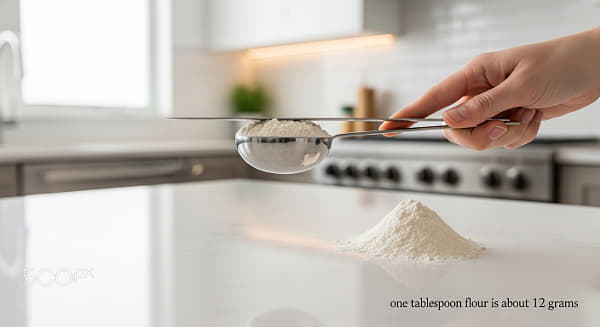
Why spoons can estimate grams
Spoons measure volume while grams measure weight. Density links the two. Flour traps air and reads light in a spoon. Sugar is compact and reads heavy. The fix is to use standard spoons and typical values that work in most kitchens.
Method that works in any kitchen
- Pick a set of measuring spoons marked teaspoon and tablespoon.
- Check the table below for typical spoon values.
- Scoop gently and level the top with a straight edge.
- Do the quick math to reach the target grams.
- Use the same spoons for repeatable results.
Tip. Casual cooking forgives small variance. For fine baking or nutrition tracking a scale is best.
Common spoon to gram values
| Ingredient | 1 teaspoon | 1 tablespoon | Notes |
|---|---|---|---|
| Granulated sugar | 4 to 5 g | 10 to 15 g | Level spoon only |
| All purpose flour | 3 to 4 g | 12 to 15 g | Do not pack |
| Fine salt | 5 g | 15 g | Dense and uniform |
| Butter softened | 5 g | 14 g | Soft not melted |
| Cocoa powder | 2 to 3 g | 8 to 10 g | Sifted gives consistency |
Pro tips for better accuracy
- Keep ingredients dry and loose.
- Level every spoon the same way.
- Memorize one or two values you use the most.